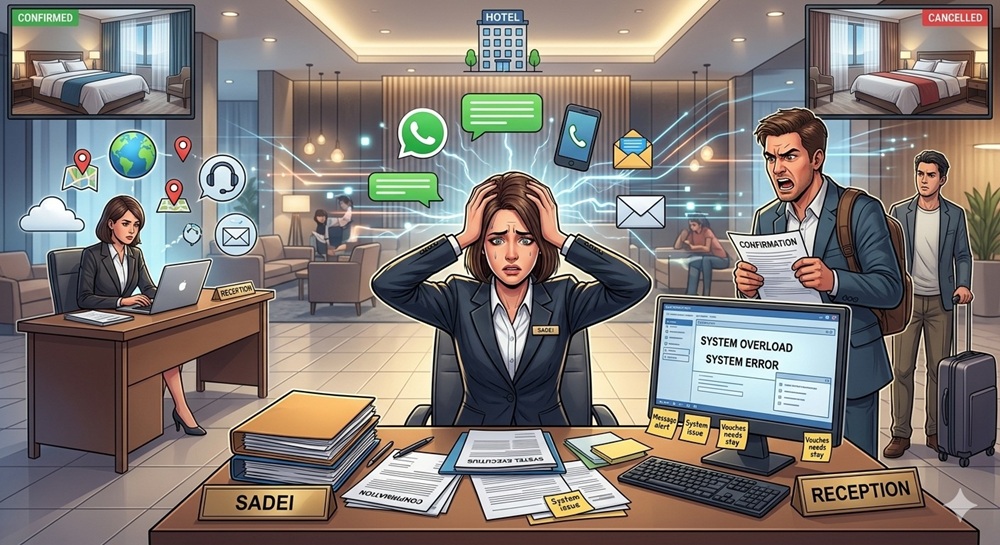
More and more people are travelling these days. And the hospitality industry is at its peak. Some of my friends in the industry told me that they are in the hyper active mode especially in vacation season. Managing calls and queries has became near to impossible.
The hotel industry must shift from scattered touchpoints to a centralized Customer Relationship Management (CRM) system. That is the definitive solution to bridge these gaps, streamline operations, and deliver seamless guest experiences.
Communication Triangle in hospitality
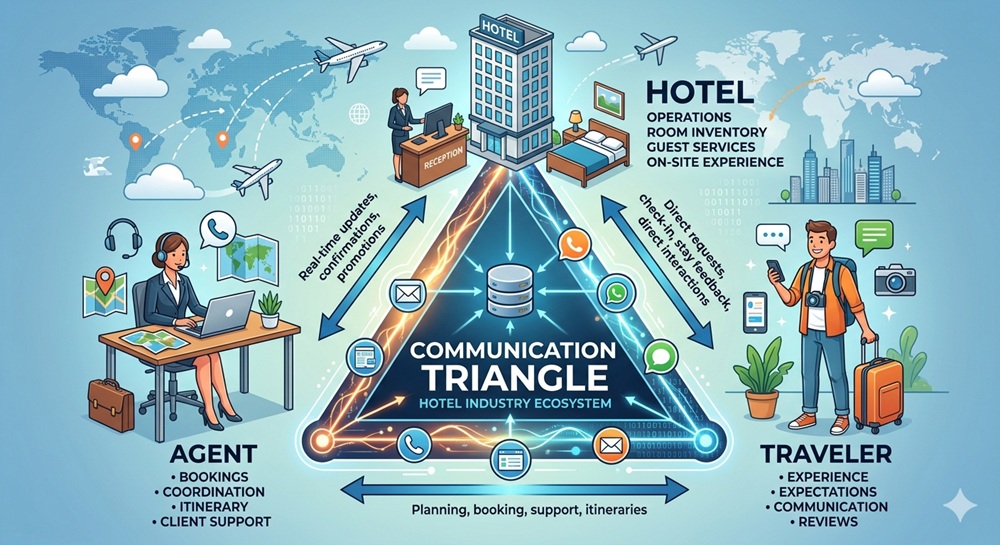
Basically there are 3 parties in the hospitality industry that lead the conversation.
- Hotels
- Travel Agencies
- And Travelers
Common Challenges in Hospitality Industry
Guest Requests Get Lost
Consider a typical scenario. A traveler requests an airport pickup, early check-in, and a severe dietary restriction. The reservations team notes these details, yet upon arrival, the guest is stranded at the airport, their room isn’t ready, and the kitchen is unaware of their allergies.
Without a unified system, critical data is usually trapped in notepads. This internal communication breakdown directly fractures the guest experience, instantly eroding trust before the traveler even unpacks.
How does CRM solve this problem?
Implementing a hospitality CRM solves this by establishing centralized guest profiles. By enabling shared notes across all departments and triggering automated alerts, a CRM ensures that a request made to reservations is instantly visible to the front desk, housekeeping, and kitchen staff alike, eliminating costly human errors.
Slow Response Times
Modern travelers expect instant gratification. As hotels have many platforms to reach out through, like social media, whatsapp, calls etc. When planning a trip, a guest might fire off a quick question about parking via WhatsApp, check room availability through a website form, send a follow-up email, and later ping the hotel’s Instagram account. This fragmented ecosystem triggers a chaotic multi-channel logjam for hotel staff responsible for manual monitoring,
If staff has to shift between disconnected tabs and logins, it makes tracking ongoing conversations nearly impossible. As a result, critical inquiries sit unanswered for hours, causing frustrated travelers to abandon their bookings and turn to faster-responding competitors.
How does CRM solve this problem?
A hospitality CRM eliminates this friction through a unified communication dashboard, which pulls all incoming messages from WhatsApp, email, and social media into a single, cohesive feed. With benefits of automated ticket assignment, the system instantly routes queries to the concerned department, while response tracking ensures no guest is left waiting on standby.
Inconsistent Information
Few things damage a hotel’s credibility faster than internal contradictions.
A traveler called reservations and got promised a complimentary room upgrade. Later, the front desk receptionist at check-in insists that no such policy exists. While online customer support provides a third, completely different answer. This disconnection among team members forces the guest to repeat their story multiple times, making it frustrating which should be a luxury experience. When staff members operate on conflicting scripts, it breeds immediate confusion, projecting an image of unprofessionalism and deeply eroding guest trust.
How does CRM solve this problem?
A hospitality CRM solves this internal misalignment by establishing a single source of guest data. Because every interaction is logged in real time, all departments can access a shared communication history, ensuring a receptionist sees exactly what support promised an hour ago. Furthermore, by utilizing standardized responses and centralized templates, the CRM guarantees that whether a guest reaches out via phone, email, or chat, the hotel speaks with one clear, consistent, and reliable voice.
Also Read: odoo vs ZOHO CRM: What You Didn’t Knew Till Now?
Travel Agencies not updated with Real Time Updates
Till now, we noticed what communication gap between hotel and guests can result in. What if we add a travel agent between them. To avoid the hassle, people usually prefer hiring a travel agent to make the arrangements.
When a hotel lacks a modernized infrastructure, agencies operate in a data blindspot. It results in lacking real-time visibility into actual room availability, live booking statuses, or flash promotions. This information lag forces agents to rely on manual back-and-forth emails or outdated rate sheets. As a result, agents accidentally book sold-out rooms, quote incorrect rates, or miss out on tailored promotions which makes booking messy. Double bookings, and awkward cancellations also become usual that leave the traveler caught in the middle.
How does CRM solve this problem?
A hospitality CRM resolves this coordination friction by acting as a hub for centralized booking information. It integrates with the property’s core inventory and the CRM pushes automated notifications regarding changes in room availability or active promotions directly to partner agencies. This seamless data sharing promotes better agency collaboration, ensuring that external booking partners can confidently manage traveler expectations with flawless, real-time accuracy.
How a well-integrated CRM Benefits Travelers?
Faster Responses
A CRM consolidates all communication channels into a single dashboard, allowing staff to view and reply to messages instantly. Whether a traveler pings the hotel via WhatsApp, email, or social media, they receive rapid answers, saving time and removing booking anxiety.
Personalized Experiences
It securely stores past guest preferences, from room temperature and dietary needs to pillow choices. When a traveler returns, the hotel can automatically tailor the stay to their liking without the guest ever having to ask twice, making them feel genuinely valued.
Fewer Booking Errors
By centralizing guest profiles and automating data flow between reservations, front desks, and travel agencies, a CRM ensures that special requests, room selections, and dates are perfectly aligned. Travelers get exactly what they booked, with zero arrival surprises.
Better Pre-Arrival Communication
A CRM triggers automated, timely pre-arrival touchpoints like personalized weather updates, airport transfer confirmations, or digital check-in links. This proactive communication keeps travelers informed, eliminates last-minute stress, and allows them to plan their itinerary with absolute confidence.
Smoother Check-In and Stay Experience
Because the front desk, housekeeping, and kitchen share a single live feed, check-in is lightning-fast, rooms are prepared precisely to specification, and any on-site requests are handled seamlessly without internal delays.
How CRM Benefits Travel Agencies
Better Coordination with Hotels
A CRM replaces all fragmented conversations with a single source to connect hotel operations directly with external partners. Agencies can instantly checkout into live room inventory and real-time rates.
Faster Booking Confirmations
With centralized booking workflows and automated validation, booking requests are no longer ignored in a supervisor’s inbox waiting just for a manual approval. Agents can secure room allocations and receive instant, automated confirmations, allowing them to finalize itineraries for their clients in minutes rather than days.
Easier Guest Management
A CRM allows travel agents to input and track unique client preferences, special requests, and VIP statuses within a shared profile. This data remains tied to the booking, ensuring hotel staff execute the agency’s promises flawlessly.
Reduced Communication Gaps
Any small updates to booking statuses, flight delays, or room upgrades automatically triggeres real-time alerts to both the agency and the hotel desk by the CRM. This eliminates the traditional information lag, ensuring no critical update falls through the cracks.
Improved Client Satisfaction
By eliminating double-bookings, long response times, and conflicting information, the agency can deliver a frictionless travel experience to their clients. Clients also receive reliable service from start to finish, which ultimately builds deep trust, protects the agency’s reputation, and drives repeat business.
Also Read: What is Zoho CRM Goals? How Can You Master It?
How CRM Benefits Hotels?
Higher Guest Satisfaction
By eliminating lost requests, long wait times, and internal communication silos, a CRM ensures that every guest interaction is a good experience. Travelers feel heard, recognized, and valued throughout the journey, which naturally translates into a superior on-property experience.
Increased Repeat Bookings
A CRM allows hotels to shift from transactional sales to relationship building. By tracking guest histories, preferences, and stay milestones, hotels can launch hyper-targeted, personalized email marketing campaigns. By offering a guest their favorite room or a tailored loyalty discount, hotels can ensure their property stays top-of-mind for their next trip.
Improved Online Reviews
When a CRM streamlines operations to prevent guest frustrations, positive reviews on platforms like TripAdvisor and Google naturally skyrocket. Furthermore, CRMs can automate post-stay follow-ups, prompting happy guests to share their experiences online while their positive impressions are still fresh.
Stronger Agency Relationships
By providing travel agencies with real-time data access, faster confirmations, and flawless execution of client requests, a CRM positions your hotel as a preferred, hassle-free partner. This professional reliability secures steady, high-volume booking pipelines from top-performing agencies.
More Efficient Staff Operations
A CRM removes the burden of administrative chaos from your hotel team operations. With automated ticket assignments, unified messaging dashboards, and inter-departmental alerts, staff spend significantly less time chasing updates across desks and more time delivering high-quality, face-to-face guest hospitality. Management also needs to make sure if the staff is ready for the CRM adoption or not.
Conclusion
Communication is one of the most important aspects of hospitality. When hotels, travel agencies, and travelers are not aligned, mistakes happen and guest satisfaction suffers. A CRM system acts as a central communication hub, ensuring everyone has access to accurate information and helping deliver a smoother, more personalized travel experience.